

C.S. Lewis - a Mere Anglican

Updated: Sep 28
Discover the church, worship, and tradition that helped form one of Christianity’s most beloved voices.
Millions of people have encountered Christianity through C. S. Lewis. Through Mere Christianity, The Chronicles of Narnia, The Screwtape Letters, and his many other works, Lewis presented a faith that is intellectually serious, imaginatively compelling, and deeply rooted in the historic Christian tradition.

But Lewis was not simply a generic Christian thinker. He was an Anglican: a worshipping member of the Church of England who described himself:
"I am a very ordinay layman of the Church of England." - C.S. Lewis, Mere Christianity
Lewis was a practicing Anglican. He worshipped regularly, received Holy Communion, followed the Christian year, and lived within the ordinary life of an Anglican parish.
Lewis’s generous vision of “mere Christianity” did not leave him detached from the life of a particular church. His own faith was lived deliberately within the Church of England, through its worship, prayers, sacraments, and parish life. Anglicanism was not simply a detail in Lewis’s biography; it was the Christian tradition he chose to live out his faith in.

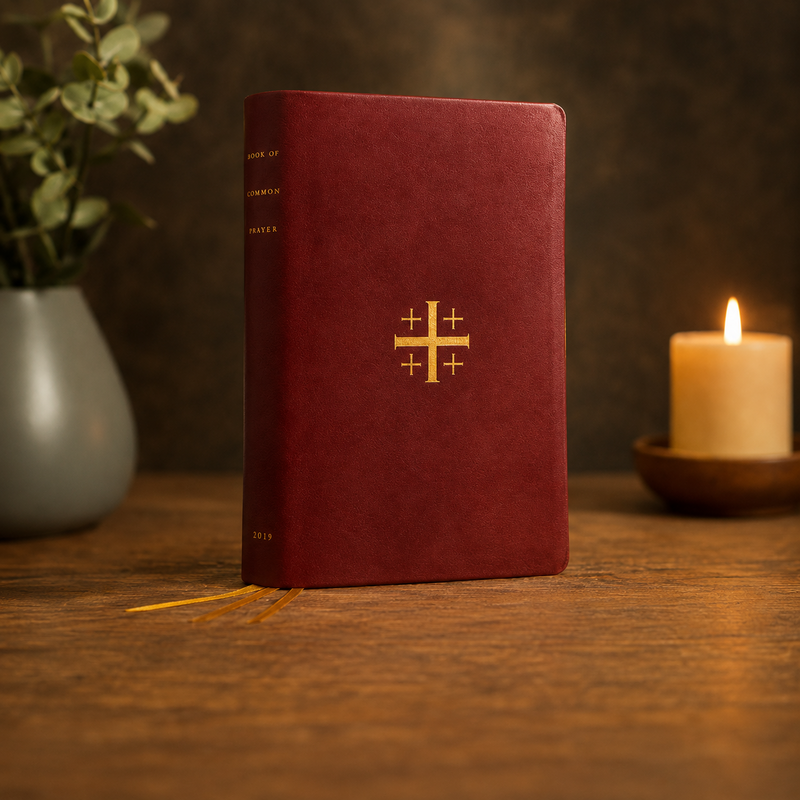
He attended Holy Trinity Church in Headington Quarry, near his Oxford home, and both he and his brother Warren were eventually buried in its churchyard. His Christianity was practiced within the ordinary life of an Anglican parish: Sunday worship, Holy Communion, the Christian calendar, the Book of Common Prayer, sermons, hymns, and life alongside Christians he had not chosen for himself.
The Christianity found in Lewis’s writings did not arise in isolation. It grew within the worship and spiritual inheritance of the Anglican Church.
The Anglican tradition was the church in which Lewis prayed, worshipped, received Holy Communion, and lived the faith he commended so powerfully to others.
If the Christianity you have encountered in Lewis's works feels like coming home...
...you may find that Anglicanism feels like coming home too.


Comments